
Restorative and Relational Practice
Restorative and Relational Practice
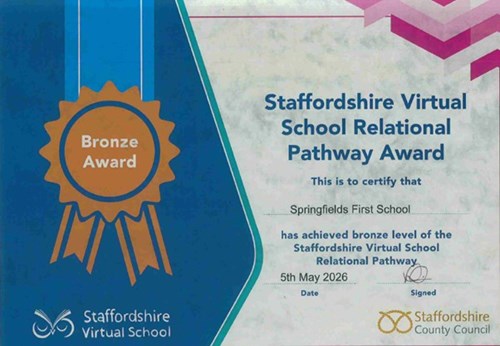
At Springfields we are proud to announce that we have recently been awarded our Bronze RRP award in recognition of using restorative pathways to deal with behaviour in a way that works positively and helps to build the ongoing relationships needed for children to learn and grow.
Coaching Circles
At Springfields First School, we use relational practices to respond to the challenges faced by young people and our community in the modern world. We believe that strong relationships support learning and mental health.
Our coaching programme
The Coaching programme at Springfields is fundamental to form strong relationships within our community.
Our Coaching groups are vertical and consist of up to twelve pupils and one member of staff. Groups include pupils from Reception to Year 4. Our Pre-school children participate in their own coaching groups within Pre-school.
When pupils arrive on a Monday morning, their first session is spent with their Coaching group. This is called a ‘check-in’ session. This circle-based session allows all pupils to discuss the thunk of the week. Pupils also share updates from their weekends and goals for the week ahead.
On Wednesday, each class discusses how the week is progressing. Children may also talk about a current affair topic to learn from our world and develop respect for other’s beliefs, feelings and faiths. They encourage exploration, discussion, challenge and inspire children to learn.
On a Friday, Coaching groups meet after assembly for a check-out circle. This is a time for pupils to discuss their achievements from the week and review current targets, ensuring they are best aligned to make the most of learning opportunities. The Friday Coaching session is also a chance for a community builder – pupils play games together to develop relationships within the group.
Coach Contact
The ‘coach’ – the member of staff in each Coaching group – ensures every pupil has a voice. Children remain in the same coaching group throughout their time at Springfields whenever possible to develop deep, trusting relationships.
Restorative Practice
To build and maintain strong, healthy relationships, Springfields First School believes it is important to equip young people with the necessary skills to resolve difficulties and repair harm where there has been conflict. One way in which we do this is through restorative practice by supporting self-regulation, facilitating repair, encouraging problem solving, creating connections, and building relationships. Restorative practice is a way of working with conflict that puts the focus on repairing the harm that has been done and includes all the parties involved in a dispute.
Restorative practice ensures that every voice in school is heard. It encourages pupils to treat others with respect and to understand why relationships are so important.
Our restorative approach helps pupils:
- understand how their actions can affect others
- develop characteristics they can use in and out of school
- understand themselves and each other better
- learn why it’s important to see another person’s point of view
- see that it’s ok to make mistakes
- learn how to move through conflict creatively
Questions to ask when approaching situations in a restorative way:
What happened?
- What were you thinking about at the time?
- What have your thoughts been since?
- How do you feel about what has happened?
- Who has been affected by what’s happened?
- In what ways have they been affected?
- What needs to happen to make things right?
Most situations can be dealt with by working through these questions. The aim here is that the outcome is fair for everyone. If somebody is upset, we aim to make them feel better. If someone has done something wrong, we expect them to take responsibility for their actions and fix the situation.
Restorative Thinking and Positive Relationships: working together
When children see parents/carers communicating well and staying calm, it can help them cope with their own big emotions.
For real change to happen, we need all stakeholders in the school community to get involved and have their say. This includes children, staff, families and governors. We aim to support the wider school community, encouraging parents and carers to use Restorative Practice in a way that is consistent with the school’s approach.
“A community functions and succeeds because of strong relationships”